Tuesday, December 09, 2008
Free Sufjan song
Asthmatic Kitty has a Christmas site up right now, and on it you can download a couple of free songs by Sufjan Stevens, one of which is the exquisite "Sister Winter." David Taylor mentioned that song alongside the work of Dostoyevsky and Michaelangelo in his essay for The Christian Vision Project (entitled "A Holy Longing") as an example of beauty. It is indeed a beautiful piece of music, and here Sufjan is giving to you for free.


Friday, November 21, 2008
Shai Linne - The Atonement
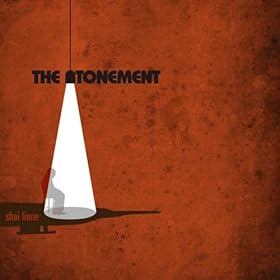 So I'm at this conference several weeks ago, and this worship band was awesome. It was gospel music with the message of the gospel front and center. So afterward I ask one of the singers where they find that kind of gospel-centered gospel music, and he says they're not finding it anywhere, that they're kind of making it up as they go. We talk for a minute or two, and then he reaches into his backpack and pulls out a CD and says, "Here man, take a copy of my CD." It turns out the dude was Shai Linne, and the record is unbelievable. I know lots of seminary grads who could be schooled by this. I can't stop listening to it. Best songs: Mission Accomplished and The Gospel.
Tuesday, April 08, 2008
Glad to see this happening
I saw this post on the Mars Hill music website, and I was glad to see this kind of wrestling going on. Yes, the song is fun to play and sing, and I'm sure it's even more so when you have a cool arrangement of it as he describes. But if the words are messed up theologically (as many songs from that era are), it's not appropriate to use in corporate worship. I hope folks can learn from this good example of critical thinking.
Thursday, February 14, 2008
Yeah, I'm kind of a big deal
My buddy John Carroll asked me to write a guest post on his blog about Google Docs as part of a week-long series he's doing on how Google Apps can be helpful to people in ministry.
Prepare yourself before you read it. It's so good, it may move you to tears.
Check it out.
Prepare yourself before you read it. It's so good, it may move you to tears.
Check it out.
Tuesday, February 05, 2008
Good song from Buddy and Julie Miller
It's hard to find reviews of Buddy and Julie's music that don't contain the words "real" or "honest". I have all of Buddy's records, and I love them all. Not only that, but he and Julie show up on several of my other favorite records of the last several years, such as Emmylou Harris' and Patty Griffin's. This video is well done, and Buddy's electric guitar solo is sweet as always. Julie wrote the song.
Saturday, October 27, 2007
Celebrity preaching as one of the roots of Evangelical Christianity
Interesting blurb from largehearted boy:
"LiveDaily interviews singer-songwriter Josh Ritter.
What’s the last book you read?
I just read The Most Famous Man in America which is the biography of Henry Ward Beecher (a 19th century preacher). It just won the Pulitzer Prize and it’s about one of America’s great entertainment industries, which are preachers (laughs). And it's basically about the roots of Evangelical Christianity and the real, kind of, rock 'n' roll preachers from (Beecher) all the way down the line to Billy Graham and some of those new guys who are coming. It's kind of the melding of the Bible and the dollar. It's pretty interesting. He was a major force in the abolition of slavery. Really interesting guy."
"LiveDaily interviews singer-songwriter Josh Ritter.
What’s the last book you read?
I just read The Most Famous Man in America which is the biography of Henry Ward Beecher (a 19th century preacher). It just won the Pulitzer Prize and it’s about one of America’s great entertainment industries, which are preachers (laughs). And it's basically about the roots of Evangelical Christianity and the real, kind of, rock 'n' roll preachers from (Beecher) all the way down the line to Billy Graham and some of those new guys who are coming. It's kind of the melding of the Bible and the dollar. It's pretty interesting. He was a major force in the abolition of slavery. Really interesting guy."
Tuesday, October 23, 2007
Great little forgotten hymn by John Kent
Check out this little hymn I found. I love his use of the word "precepts"--especially considering the way that word typically gets used in Bible church circles.
(from A New Selection of Seven Hundred Evangelical Hymns: For Private, Family, and ... By John Dobell, Isaac Watts)
(from A New Selection of Seven Hundred Evangelical Hymns: For Private, Family, and ... By John Dobell, Isaac Watts)
Monday, May 28, 2007
Good news for corporate worship music
Kevin Twit says they have started the next Indelible Grace project. Indelible Grace really opened my eyes to what substantial worship music looks like back when the second CD came out like eight years ago, and the projects have been pretty consistently good since. The sound has gotten better with each record.
Speaking of Indelible Grace, I finally bought some tracks off of Matthew Smith's new disc, All I Owe, and I recommend the song None Among. I had marked that one in my Spurgeon hymnal to write a new tune to, but Matthew beat me to the punch.
Speaking of Indelible Grace, I finally bought some tracks off of Matthew Smith's new disc, All I Owe, and I recommend the song None Among. I had marked that one in my Spurgeon hymnal to write a new tune to, but Matthew beat me to the punch.
Tuesday, May 08, 2007
30
So today I'm 30. Maggie was asking Melissa last night if she thought I would wake up with lots more gray hair.
How did I spend my last night in my twenties? In our IBUC elders meeting with a bunch of dudes in their 60s. Pretty much awesome.
How did I spend my last night in my twenties? In our IBUC elders meeting with a bunch of dudes in their 60s. Pretty much awesome.
Tuesday, May 01, 2007
listen to Sky Blue Sky for free
My favorite band is continuing their tradition of letting fans stream their new record on their website for free before it comes out. Check it out here. Totally different from either of their last two records, but I'm loving it.
If you listen to it, let me know what tracks you're digging the most.
If you listen to it, let me know what tracks you're digging the most.
Bob Kauflin on plannings songs for the long haul
I know I have several times on this blog linked to Bob Kauflin's Worship Matters blog, but it has been a while. Yesterday he posted a draft of part of a chapter of the book he's working on, and it's absolutely brilliant. He's talking about viewing your song selection over a long period of time and essentially asking yourself if with the content of the songs you are faithfully shepherding your people towards a biblical, well-rounded view of God. This question won't even make sense to worship leaders who view their role primarily as performers instead of pastors. Sadly, that's all many churches expect out of the guy who chooses their diet of corporate worship music. Also sad is that many churches make style and/or instrumentation the highest priority, so that, for example, the worship leader is forced to choose only from songs that have orchestra arrangements available on the market.
Read Bob's post here.
Highlights:
Read Bob's post here.
Highlights:
"...a meal isn’t the same thing as a diet. God doesn’t want us only to be concerned about this Sunday. He wants us to keep the big picture in view."
"Reviewing your songs can answer some important questions.
- Are any themes missing or lacking?
- Are we falling into a rut musically or thematically?
- Are God’s Word, worthiness, and works being proclaimed in our songs?
- Are we worshiping a triune God in song?
- Are we conscious of the Gospel each time we sing?
- Do we need more songs of celebration or reverence?
- Are we doing any songs too frequently or not often enough?
- Do we have a healthy blend of deep and simpler songs?
- Are there any songs we don’t do any more that we should start doing again?"
"A good measure of how we’re doing in this area is what I call the “twenty year rule.” If someone was born in our church and grew up singing these songs, how well would they know God? Would they see that he is holy, wise, omnipotent, and sovereign? Would they know him as Creator, Sustainer, and Redeemer? Would these songs give them a comprehensive and broad view of God, or would they only be exposed to certain aspects of his nature and works?"
Thursday, April 26, 2007
Good post by Brian Moss
Brian Moss is a worship leader and recording artist in Seattle. He has written some new tunes for old hymns and has a cool project out setting some of the Psalms to music (with presumably more to come). You can listen to some of that here, but today I'd like to call your attention to a post on his blog in which he raises some concerns about people approaching corporate worship with consumerist attitudes (though he doesn't use those exact words to describe it). For example, he mentions the classic case of an evangelical family going "church shopping", which I think pretty much says it all.
He makes a good point in his article when he says that "worship can be uncomfortable". I don't think any pastor would explicitly state that their chief goal is to make their people comfortable in corporate worship, but I think in reality that is the motivation behind our wanting people to leave the service feeling blessed, not wanting visitors to feel awkward, and not wanting outsiders to think we are fanatics. I think even when we express things in terms of wanting congregants to "feel like they have met with God", we often really mean that we want them to have an encounter with God and come away with a positive feeling. Sure, perhaps the encounter with God will make us want to sin less, be a better father, and give more to the church; but in general pastors tend to want people to leave feeling affirmed and self-fulfilled. The truth is that, unless we avoid mentioning God's character as seen in Christ's life/death/resurrection, the state of the world, and our own remaining sin, we should be made uncomfortable in corporate worship.
After ranting a little bit more, Moss says,
Amen.
He makes a good point in his article when he says that "worship can be uncomfortable". I don't think any pastor would explicitly state that their chief goal is to make their people comfortable in corporate worship, but I think in reality that is the motivation behind our wanting people to leave the service feeling blessed, not wanting visitors to feel awkward, and not wanting outsiders to think we are fanatics. I think even when we express things in terms of wanting congregants to "feel like they have met with God", we often really mean that we want them to have an encounter with God and come away with a positive feeling. Sure, perhaps the encounter with God will make us want to sin less, be a better father, and give more to the church; but in general pastors tend to want people to leave feeling affirmed and self-fulfilled. The truth is that, unless we avoid mentioning God's character as seen in Christ's life/death/resurrection, the state of the world, and our own remaining sin, we should be made uncomfortable in corporate worship.
After ranting a little bit more, Moss says,
I write this because worship is eternal. I write this because worship matters. When worship is reduced to a top 20 countdown we lose. When worship is reduced to what we get out of a worship service we lose. When worship is reduced to only what we like in worship we lose.
Amen.
Monday, April 16, 2007
Pronouns and God-centered worship music
Here is a rant post.
Remember like 15 years ago, when a big deal in worship music was people complaining about songs that were so vague they could either be about God or your girlfriend? There were people running around saying that a song had to specifically mention a Member of the Trinity or it wasn't pleasing to God. Even as a kid I thought that was a pretty ridiculous thing to say, even though I did agree that it's pretty weak sauce to sing songs that were so vague. The problem is that a stupid grammatical rule is not going to fix our corporate worship, because the grammar is not the heart of the problem. A songwriter can put a name of God in the song, and it can still say nothing substantial.
If you have ever talked to me about worship singing before, you know that I'm all about the content. I am more convinced every day that the songs we use in corporate worship should be substantial (meaning they should say something coherent) and God-centered (meaning they should be focused on glorifying God). Recently, however, I have been hearing alot of nonsensical talk about the God-centeredness issue. It seems everyone thinks that the key problem with songs today is that there are too many first person pronouns. I have even heard it argued that in the good old days of hymnody all the pronouns were in the second person (you, your, thou, thy), whereas in contemporary worship music it all "I, me, my, mine". Now, another thing you'll know about me if you have ever heard me talk about worship music is that I love hymns, and, furthermore, I completely agree that worship music these days tends to be "me-centered". But let's not miss the point by making it a grammatical issue. The point is that our culture is obsessively ego-centric, and that is reflected in the music our culture's Church produces. Also, I think the self-obsession reflects our theological vacancy. Our songs tend to default to our feelings, impressions, promises, intentions and desires simply because we have an extremely difficult time thinking coherently for a sustained period of time about God and the gospel. We think it's boring and irrelevant.
Kevin Twit defines hymns as "mini-meditations on the paradoxes of the gospel that drive us to worship". While that definition may be a little too limited, since there are good hymns that don't fit within that conception, I think it's worth considering whether that definition can be applied to anything being produced today in corporate worship music. Are any songs being written today mini-meditations on anything that drive us to worship? No, they all just express our feelings or try to manipulate us with hype (an unfair blanket statement, I'll admit, but generally true).
Last year Jono (an excellent worship leader who highly values substantial, God-centered worship music) forwarded me an email he had gotten from someone in the congregation complaining that the songs didn't use the same kind of language in which we typically talk to God. I get the impression that most folks think along those lines, but my idea of the purpose of corporate worship music is that it should be formative. It should shape the way we think about God. It should paint for our forgetful minds a vivid picture of God's greatness--vivid as in sharp, specific, and detailed--and it should call us to increase our trust in and submission to him. At least that's, in part, how I understand the biblical injunction to "teach and admonish one another with psalms and hymns and spiritual songs".
Another problem with defining the problem in terms of the first person pronoun count is that, if we in any way see the Psalms as prescriptive of our worship music (which I think we should), we have to recognize that the Psalms are by no means lacking first person. And this of course accords also with Piper's whole "God is most glorified in me when I am most satisfied in him" thing. God reveals himself to us in the Bible in terms of "all that he is for us in Christ Jesus now and forever", so we'd better not try to define God-centeredness in stricter terms than God himself!
So let's not try to put a band-aid on these deeper issues by making it into a grammatical issue. I'm afraid this problem is a little bit beyond the pronoun police. It's going to require some careful and courageous shepherding, and it's going to require that we recognize and repent of our self-centeredness. May God do a work in our congregations to ween us off our self-obsession and give us a taste for truth about him--in other words, a taste for him, as he has revealed himself to us.
Remember like 15 years ago, when a big deal in worship music was people complaining about songs that were so vague they could either be about God or your girlfriend? There were people running around saying that a song had to specifically mention a Member of the Trinity or it wasn't pleasing to God. Even as a kid I thought that was a pretty ridiculous thing to say, even though I did agree that it's pretty weak sauce to sing songs that were so vague. The problem is that a stupid grammatical rule is not going to fix our corporate worship, because the grammar is not the heart of the problem. A songwriter can put a name of God in the song, and it can still say nothing substantial.
If you have ever talked to me about worship singing before, you know that I'm all about the content. I am more convinced every day that the songs we use in corporate worship should be substantial (meaning they should say something coherent) and God-centered (meaning they should be focused on glorifying God). Recently, however, I have been hearing alot of nonsensical talk about the God-centeredness issue. It seems everyone thinks that the key problem with songs today is that there are too many first person pronouns. I have even heard it argued that in the good old days of hymnody all the pronouns were in the second person (you, your, thou, thy), whereas in contemporary worship music it all "I, me, my, mine". Now, another thing you'll know about me if you have ever heard me talk about worship music is that I love hymns, and, furthermore, I completely agree that worship music these days tends to be "me-centered". But let's not miss the point by making it a grammatical issue. The point is that our culture is obsessively ego-centric, and that is reflected in the music our culture's Church produces. Also, I think the self-obsession reflects our theological vacancy. Our songs tend to default to our feelings, impressions, promises, intentions and desires simply because we have an extremely difficult time thinking coherently for a sustained period of time about God and the gospel. We think it's boring and irrelevant.
Kevin Twit defines hymns as "mini-meditations on the paradoxes of the gospel that drive us to worship". While that definition may be a little too limited, since there are good hymns that don't fit within that conception, I think it's worth considering whether that definition can be applied to anything being produced today in corporate worship music. Are any songs being written today mini-meditations on anything that drive us to worship? No, they all just express our feelings or try to manipulate us with hype (an unfair blanket statement, I'll admit, but generally true).
Last year Jono (an excellent worship leader who highly values substantial, God-centered worship music) forwarded me an email he had gotten from someone in the congregation complaining that the songs didn't use the same kind of language in which we typically talk to God. I get the impression that most folks think along those lines, but my idea of the purpose of corporate worship music is that it should be formative. It should shape the way we think about God. It should paint for our forgetful minds a vivid picture of God's greatness--vivid as in sharp, specific, and detailed--and it should call us to increase our trust in and submission to him. At least that's, in part, how I understand the biblical injunction to "teach and admonish one another with psalms and hymns and spiritual songs".
Another problem with defining the problem in terms of the first person pronoun count is that, if we in any way see the Psalms as prescriptive of our worship music (which I think we should), we have to recognize that the Psalms are by no means lacking first person. And this of course accords also with Piper's whole "God is most glorified in me when I am most satisfied in him" thing. God reveals himself to us in the Bible in terms of "all that he is for us in Christ Jesus now and forever", so we'd better not try to define God-centeredness in stricter terms than God himself!
So let's not try to put a band-aid on these deeper issues by making it into a grammatical issue. I'm afraid this problem is a little bit beyond the pronoun police. It's going to require some careful and courageous shepherding, and it's going to require that we recognize and repent of our self-centeredness. May God do a work in our congregations to ween us off our self-obsession and give us a taste for truth about him--in other words, a taste for him, as he has revealed himself to us.
Sunday, March 11, 2007
Resources
Several weeks back we were driving through Austin, and Stew and his family graciously allowed my family of six to invade their two bedroom apartment for the night. We stayed up wicked late talking, and Stew has no idea how much the conversation we had that night has changed my perspective on several issues.
One comment in particular that Stew made in passing has been ringing in my ears ever since. He was talking about his disgust at hearing someone lament the fact that the Church in such-and-such third world country didn't have much in the way resources, as if that was a major barrier to the health/success of the Church there. Then Stew said something like, "since when is God dependent on resources?" or something to that effect.
I have consciously let this idea inform many conversations that I've had with people about different things since that day. I remember a few years ago reading a great little book that Zac Allen gave me by J. Scott Horrell called From the Ground Up, in which he talks about doing a study with a bunch of pastors in Brasil in which they determined that the majority of activities in the churches there revolve around four central images (1) the building, (2) the full-time minister, (3) the Sunday service, and (4) Sunday, the "Christian Sabbath." Horrell goes on to show that the controlling concepts that would more accurately express the biblical essence of the Church are (1) worship, (2) learning, (3) fellowship, and (4) evangelism/mission. I have found Horrell's simple conception of the purpose of the church really compelling and helpful over the last couple of years.
But Stew's comment really helped drive the point home to me that we in the west assume that where there are no resources, the Church is all but paralyzed. We also assume the inverse of that--that where there are an abundance of resources in and for the Church it is a sign of much success.
This was on my mind this morning as some representatives from Luis Palau's ministry came to our church to talk to us about how our church can participate in the huge Luis Palau evangelistic campaign coming up in a few weeks here in Monterrey. They showed a promotional video, and the whole selling point was what a big production it would be--they're gonna have all these big name Christian musicians in and high-profile converts and whatnot. Luis Palau himself said in the video, that he wants to show the world that Christian artists are first-class.
Now I'll keep my opinions about this kind of thing to myself for now. I don't make the decisions in our church about whether or not we'll participate in stuff like this--if we do participate I'll do it wholeheartedly. But this morning in my own mind I resolved to do what I can to make sure the church doesn't buy into the idea that we need these kind of resources to be faithful in our mission.
One comment in particular that Stew made in passing has been ringing in my ears ever since. He was talking about his disgust at hearing someone lament the fact that the Church in such-and-such third world country didn't have much in the way resources, as if that was a major barrier to the health/success of the Church there. Then Stew said something like, "since when is God dependent on resources?" or something to that effect.
I have consciously let this idea inform many conversations that I've had with people about different things since that day. I remember a few years ago reading a great little book that Zac Allen gave me by J. Scott Horrell called From the Ground Up, in which he talks about doing a study with a bunch of pastors in Brasil in which they determined that the majority of activities in the churches there revolve around four central images (1) the building, (2) the full-time minister, (3) the Sunday service, and (4) Sunday, the "Christian Sabbath." Horrell goes on to show that the controlling concepts that would more accurately express the biblical essence of the Church are (1) worship, (2) learning, (3) fellowship, and (4) evangelism/mission. I have found Horrell's simple conception of the purpose of the church really compelling and helpful over the last couple of years.
But Stew's comment really helped drive the point home to me that we in the west assume that where there are no resources, the Church is all but paralyzed. We also assume the inverse of that--that where there are an abundance of resources in and for the Church it is a sign of much success.
This was on my mind this morning as some representatives from Luis Palau's ministry came to our church to talk to us about how our church can participate in the huge Luis Palau evangelistic campaign coming up in a few weeks here in Monterrey. They showed a promotional video, and the whole selling point was what a big production it would be--they're gonna have all these big name Christian musicians in and high-profile converts and whatnot. Luis Palau himself said in the video, that he wants to show the world that Christian artists are first-class.
Now I'll keep my opinions about this kind of thing to myself for now. I don't make the decisions in our church about whether or not we'll participate in stuff like this--if we do participate I'll do it wholeheartedly. But this morning in my own mind I resolved to do what I can to make sure the church doesn't buy into the idea that we need these kind of resources to be faithful in our mission.
Sunday, December 17, 2006
Speaking of hymns...
Since I'm already writing about hymns, I thought I'd post a couple of other hymn-related items.
First, check out this hymn :
That's pretty much the biznomb. It's a great example of how sometimes a few lines of poetry can say what it would take several paragraphs of prose to communicate. Kevin Twit (the Indelible Grace mastermind) posted it on his blog (and the full original text is included in the post as well).
Second, Brian Moss posted his version of "In the Cross of Christ I Glory" on his blog for downloading. The CD it was on is now out of print, so he decided to give it away. The lyrics are a bit cryptic, but I like the idea of the hymn--namely, that the cross is neither made void by bad times nor made unnecessary by good times. It's similar to the idea communicated by that Matt Redman song, "Blessed Be Your Name," only it centers around the cross instead of my resolve. With some explanation (always a good thing), this could be a useful, meaningful congregational song.
First, check out this hymn :
Hast Thou Heard Him, Seen Him?
anonymous early 20th century hymn (alt. Kevin Twit)
1. Hast thou heard Him, seen Him, known Him?
Is not thine a captured heart?
Chief among ten thousand own Him;
Joyful choose the better part
Chorus: Captivated by His beauty
Worthy tribute haste to bring;
Let His peerless worth constrain thee
Crown Him now unrivaled King.
2. What can strip the seeming beauty
From the idols of the earth?
Not a sense of right or duty
But the sight of peerless worth
3. ‘Tis the look that melted Peter
‘Tis the face that Stephen saw
‘Tis the heart that wept with Mary
Can alone from idols draw
That's pretty much the biznomb. It's a great example of how sometimes a few lines of poetry can say what it would take several paragraphs of prose to communicate. Kevin Twit (the Indelible Grace mastermind) posted it on his blog (and the full original text is included in the post as well).
Second, Brian Moss posted his version of "In the Cross of Christ I Glory" on his blog for downloading. The CD it was on is now out of print, so he decided to give it away. The lyrics are a bit cryptic, but I like the idea of the hymn--namely, that the cross is neither made void by bad times nor made unnecessary by good times. It's similar to the idea communicated by that Matt Redman song, "Blessed Be Your Name," only it centers around the cross instead of my resolve. With some explanation (always a good thing), this could be a useful, meaningful congregational song.
Come, ye sinners
I lead worship at our Sunday church services. Other people participate with me, and my goal is to work toward pushing others toward that leadership role, but for now I lead each week. When I say that I lead worship, I mean that in the service I take a leadership role and try to direct the congregation's thoughts and affections Godward, setting the truth before them, with the goal that we would treasure him more than anything else, and that that treasuring would be manifested in our lives as faithful obedience, sacrificial love, and the forsaking of sin in our lives (among other things).
If you think about it, this is a hopelessly impossible task. We're talking about humans here. Each one of us is a sinner, and we're all, as Bill Hybels says, on the downward escalator. During the week we have been bombarded on all sides with the lies of the world--in advertisements, in our entertainment, and in our culture's values in general--preaching to us that we don't need God, that other things will satisfy us more than him, that he doesn't know what's best for us, or what have you. And the thing is, more often than not we believe this message. We buy it, hook, line, and sinker, and we go back to it over and over again, even though God continually proves it wrong. To put it in the prophet Jeremiah's words, "Be appalled, O heavens, at this; be shocked, be utterly desolate, declares the LORD, for my people have committed two evils: they have forsaken me, the fountain of living waters, and hewed out cisterns for themselves, broken cisterns that can hold no water." (Jeremiah 2:12-13) To put it like Paul does in Romans 1, we "exchanged the truth about God for a lie and worshiped and served the creature rather than the Creator."
So even though there is nothing in the universe more satisfying than walking with God, not one of us naturally seeks him. I could teach this from a theological standpoint, but for now I'll just say that in my own experience, both from knowing my own heart and from pastoral ministry, this has been evident. And it makes the idea of trying to confront this head-on seem, as I said before, crushingly hopeless. Of course, the Holy Spirit can open hearts and change lives, reveal truth to our minds and put affections in order. But without him we really are hopeless.
Each Sunday morning for the past several months, I have tried to listen to the hymn "Come, Ye Sinners, Poor and Wretched" both to remind myself of this hopelessness apart from God (lest I fail to hope only in him to actually accomplish something in a worship service) and to remind myself of his promised grace and mercy. Here are the lyrics:
Come, ye sinners, poor and wretched,
Weak and wounded, sick and sore;
Jesus, ready, stands to save you,
Full of pity, joined with power.
He is able, He is able;
He is willing; doubt no more.
There was a time when I used to think this sort of lyric would be applicable only to the unconverted, and that believers didn't need to hear this; but now I know I need, as all believers do, to be confronted with these truths constantly. I have never found a Spanish version of this hymn, so if anyone knows of one, let me know. If I was leading worship somewhere regularly in English, I might very well start off every service with this song (at least until everyone got hacked off about it and I got in trouble).
By the way, there is a tampered-with version of this hymn that became popular during the Second Great Awakening that cuts off the last two lines of each verse (some of the most pointed lines) and adds a sappy chorus. This was obviously done to make it more friendly to the revivalist theology of the day, but it changes the meaning of the song completely. You can buy the good version on iTunes from Matthew Smith's album, Even When My Heart Is Breaking.
If you think about it, this is a hopelessly impossible task. We're talking about humans here. Each one of us is a sinner, and we're all, as Bill Hybels says, on the downward escalator. During the week we have been bombarded on all sides with the lies of the world--in advertisements, in our entertainment, and in our culture's values in general--preaching to us that we don't need God, that other things will satisfy us more than him, that he doesn't know what's best for us, or what have you. And the thing is, more often than not we believe this message. We buy it, hook, line, and sinker, and we go back to it over and over again, even though God continually proves it wrong. To put it in the prophet Jeremiah's words, "Be appalled, O heavens, at this; be shocked, be utterly desolate, declares the LORD, for my people have committed two evils: they have forsaken me, the fountain of living waters, and hewed out cisterns for themselves, broken cisterns that can hold no water." (Jeremiah 2:12-13) To put it like Paul does in Romans 1, we "exchanged the truth about God for a lie and worshiped and served the creature rather than the Creator."
So even though there is nothing in the universe more satisfying than walking with God, not one of us naturally seeks him. I could teach this from a theological standpoint, but for now I'll just say that in my own experience, both from knowing my own heart and from pastoral ministry, this has been evident. And it makes the idea of trying to confront this head-on seem, as I said before, crushingly hopeless. Of course, the Holy Spirit can open hearts and change lives, reveal truth to our minds and put affections in order. But without him we really are hopeless.
Each Sunday morning for the past several months, I have tried to listen to the hymn "Come, Ye Sinners, Poor and Wretched" both to remind myself of this hopelessness apart from God (lest I fail to hope only in him to actually accomplish something in a worship service) and to remind myself of his promised grace and mercy. Here are the lyrics:
Come, ye sinners, poor and wretched,
Weak and wounded, sick and sore;
Jesus, ready, stands to save you,
Full of pity, joined with power.
He is able, He is able;
He is willing; doubt no more.
Come ye needy, come, and welcome,
God's free bounty glorify;
True belief and true repentance,
Every grace that brings you nigh.
Without money, without money
Come to Jesus Christ and buy.
Come, ye weary, heavy laden,
Bruised and broken by the fall;
If you tarry 'til you're better,
You will never come at all.
Not the righteous, not the righteous;
Sinners Jesus came to call.
Let not conscience make you linger,
Nor of fitness fondly dream;
All the fitness He requireth
Is to feel your need of Him.
This He gives you, this He gives you,
'Tis the Spirit's rising beam.
Lo! The Incarnate God, ascended;
Pleads the merit of His blood.
Venture on Him; venture wholly,
Let no other trust intrude.
None but Jesus, none but Jesus
Can do helpless sinners good.
There was a time when I used to think this sort of lyric would be applicable only to the unconverted, and that believers didn't need to hear this; but now I know I need, as all believers do, to be confronted with these truths constantly. I have never found a Spanish version of this hymn, so if anyone knows of one, let me know. If I was leading worship somewhere regularly in English, I might very well start off every service with this song (at least until everyone got hacked off about it and I got in trouble).
By the way, there is a tampered-with version of this hymn that became popular during the Second Great Awakening that cuts off the last two lines of each verse (some of the most pointed lines) and adds a sappy chorus. This was obviously done to make it more friendly to the revivalist theology of the day, but it changes the meaning of the song completely. You can buy the good version on iTunes from Matthew Smith's album, Even When My Heart Is Breaking.
Friday, December 01, 2006
Gear in Mexico
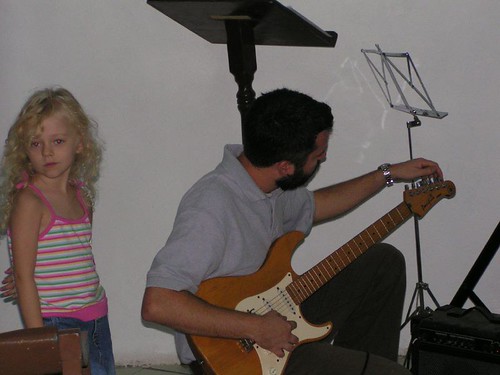 Something I don't think I have shared about yet is the interesting experiences I have had playing music in Mexico. The ability to play guitar and sing has often saved me from those inevitable situations in which you visit a church somewhere and they ask you 30 minutes before the service to preach--a lot of times they ask me to sing a song instead, which is obviously much easier.
The fun thing about borrowing instruments, however, is that you never know what you're going to get. I have been handed guitars, for example, with both a nut and a zero fret! Last time I was in Xalapa they asked me to sit in with the worship band, but I hadn't brought my guitar. They had an old Yamaha electric sitting around, along with a tiny Crate amp. I had until then never played electric guitar in public, but I thought that day was as good as any for a debut. Luckily we had arrived early, so I had a few minutes to try to get the thing in tune. Tuning is always an adventure when the strings are old and rusty, but I was able to make it happen, and we had a chance to run through the tunes. The crazy thing was that the lower frets had grooves worn into them so deep that the strings were buzzing on all my open chords, but the tuning got worse the higher up the neck I went. So I was trying to concentrate on avoiding certain notes while also trying to make up harmony vocal parts on the fly. Nothing in the UNT College of Music could have prepared me for stuff like this.
It sort of reminds me of an interview I read one time of Bill Frisell answering the question of how he learned to play the guitar so innovatively and expressively. He said that when he lived in Belgium for a few years in the late 70s he had a hard time finding guitars that played in tune, so he was having to literally bend the neck of the guitar to try to compensate, and that over time taught him to manipulate a new sound out of the instrument. Maybe I'll come back from Mexico someday and play like Bill Frisell. Probably not.
Another fond memory involves me leading worship with a bad roof leak about ten inches from my right arm and having to concentrate on not kicking over the bowl of water it was dripping into. Fun stuff.
Thursday, November 16, 2006


Wednesday, November 15, 2006
Shows that have come to Monterrey since I have been here
[in no particular order]
- Lenny Kravitz
- U2
- Metallica
- Rolling Stones
- Air Supply
- Poison
- Bryan Adams
- Kenny G
- Journey
- Pet Shop Boys
- INXS
- Morrissey
- Meatloaf
Thursday, October 26, 2006
Cultural differences between the US and Mexico
Whew. It has been awhile since the last post. Sorry to those of you who feel betrayed or neglected (all, like, one and a half of you).
I've been meaning to write about my experiences of culture shock in Mexico for awhile. Though Mexican culture and American culture are much more similar than, say, Afghani culture and American culture, there are many important differences. Today I will write about one of the most important and shocking: the difference in permissible uses of mayonnaise. [I'm including here Miracle Whip since, though it tastes different, pretty much serves the same function.]
In the US, we use mayo for sandwiches (including hamburgers) and tuna, chicken, or pea salad. Period. And those salads are the referent of the "salad dressing" description. You may not put mayonnaise on your chef salad.
In Mexico, however, those boundaries are crossed on all sides. Mayonnaise is generously slathered on hot dogs (Costco here has mustard, ketchup, mayonnaise, and jalapeño pepper dispensers for their delicious hot dogs), elote (corn, either on-the-cob or in-a-cup), and potato chips, among other things. There is a huge billboard for McCormick Mayonnaise that stretches over the ten lanes of one of the main roads that simply pictures, on the end of a fork, a bite of steak with a big dab of mayo on it. Mmmmm.
I've been meaning to write about my experiences of culture shock in Mexico for awhile. Though Mexican culture and American culture are much more similar than, say, Afghani culture and American culture, there are many important differences. Today I will write about one of the most important and shocking: the difference in permissible uses of mayonnaise. [I'm including here Miracle Whip since, though it tastes different, pretty much serves the same function.]
In the US, we use mayo for sandwiches (including hamburgers) and tuna, chicken, or pea salad. Period. And those salads are the referent of the "salad dressing" description. You may not put mayonnaise on your chef salad.
In Mexico, however, those boundaries are crossed on all sides. Mayonnaise is generously slathered on hot dogs (Costco here has mustard, ketchup, mayonnaise, and jalapeño pepper dispensers for their delicious hot dogs), elote (corn, either on-the-cob or in-a-cup), and potato chips, among other things. There is a huge billboard for McCormick Mayonnaise that stretches over the ten lanes of one of the main roads that simply pictures, on the end of a fork, a bite of steak with a big dab of mayo on it. Mmmmm.
Subscribe to:
Posts (Atom)